Thursday, April 7, 2011

F is for Failure


So, you want to be a writer? Welcome to the world of epic failures. In fact, I don't know a success story where failure held no part in it. Name your favorite author. Now go see if you can find out how many rejections that person faced in the process.
If you want to make it in the writing industry, you're going to need some armor. You will get rejections and face disappointments. It's simply a fact.

Does it hurt? Sure. I would be lying if I told you that rejections made me feel wonderful. They stink. But, I will tell you another truth- I have learned from them.

What have I learned?

*Failure is proof that you're working. If you never face rejection, you never had the courage to submit in the first place.

*If you endure, there's a good chance you will be rewarded in the end.

*You can't give up. Unless you can seriously live without this in your life, you can't afford to.

Think of failure as a phoenix. After going through an entire process of what seems like a whole lifetime, everything goes down in flames. Then from the ashes, a new life is born. Failure is a chance to start over. You can get back up.

Wednesday, April 6, 2011

E is for Editor


Editors. They could be the author of the book "Has it Ever Occurred to You That You Might Be Wrong?"


Not only do editors have the job of selecting manuscripts from an undaunting pile of submissions, they have to turn their choice into gold.


Meaning, their job is to show the writer all their mistakes. A good editor will do more than point out errors though. The best kind of editor shines a light on the work and makes it easier for the author to see what parts of the work need to be cleaned up. Or cleared up.


As a writer, you love editors. And sometimes, for about five or ten minutes, you hate them, only to love them again once it's finally gotten through your thick skull that they're right. They're almost always right. I'd say they're always right, but I'm sure there are exceptions.


So here are my tips for writers out there. Whether your editor works for a publishing house, freelance, or is your critiqueing buddy....


*Listen.


*Seriously think about the advice.


*Most of the time it takes about 30 seconds to take advice from an editor. 30 seconds per tiny change. A sentence here. A word there. A comma. These are the easy-to-take pieces of advice.


*If you have extensive revision suggestions, take more time to think about it.


*Don't tell the editor they're wrong. 99% of the time you'll regret it.


*Assume they're right and give yourself time to adjust to it.


*If for some rare reason, they are way off, you will know it only after letting the thoughts simmer in your brain for a couple days. It takes time to see things through someone else's perspective. If you think the suggestions are not right for your work, take enough time to know for sure.


*The level your editor is working on often corresponds to how imperitive their suggestions are. Your good buddy's advice will not be the same as the publisher's. Don't take your buddy's advice over the publisher's.


*Take advice on faith, and see how that works for you. I've done this before a few times. At first I didn't know if I would be okay with it, but in the end, I nearly always agreed.


*Don't give up your rights as an author. If something refuses to seem right in spite of how much you've tried to like it or make it work, then stand by your feelings. Editors are human too.


Tuesday, April 5, 2011

D is for Day Off

Enough said, right? I've got a lot on my list of things to do, and now I'm evaluating what new things I need to put on it.

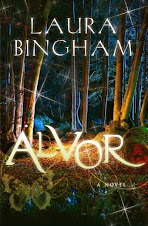
For example, do I write the final book of the Alvor series next, or something totally different? Again. I keep doing that. Maybe I'll be sad to see the series end, but I still need to get to it.

Oh, and next week I have Jury Duty. Not looking forward to it.

What is keeping all of you busy? Come on, please share!

Monday, April 4, 2011

C is for Characters

I just finished reading Cross My Heart by Julie Wright. Since her book starts with C, it's safe for today's discussion.
Which leads me to caramel steamers, which also start with C and are therefore pertinent to this post.So what does Cross My Heart and Caramel steamers have to do with characters? Everything.

When I read a book that makes me want to eat what the character is eating, see the sights, hear the sounds, feel the flutter or horrors that the character is experiencing for myself, then the character is real.

In Cross My Heart, Jillian, the main character, does not care for chocolate. I know, it sounds like a conspiracy. But instead of turning into one, she honestly lead me to believe that caramel steamers were one of life's pleasures that should not be missed.

Simple, but effective. No, this story isn't about food. But when you make your character real enough that the reader cares about what the character's preferences are- you've successfully drawn your audience in.

So here are some Character tips for the day:

*Know what your character looks like. Be specific to yourself. Hair, eyes, face, height, weight, complexion, etc.

*Know your character. Even better than your best friend, you have to know how your character would react in every situation.

*Give your characters flaws and quirks and then figure out how to make those things flow with your story. Characters without flaws are boring cartoons. People want something to fall in love with. No one is perfect, if your character is perfect, no one will relate to him/her.

*Let you amazing hero make mistakes. Stupid mistakes. Use their flaws against them.

*Know how your character is going to change by the end of your book. You can't start out with a finished product and then expect to make a convincing story. If your character isn't going to grow in some way or change as a result of the story you're writing, something is wrong with your plan. Go back and figure out how your character is going to change.

*Change isn't just good, it's critical.

*Let your reader into the character's heart and head. The reader wants to fall for your protagonist. They're anxiously waiting for any excuse to relate and love this person. But we have to get to know a person (even an imaginary one) before we can love them. Be open about how the character feels and thinks.


Okay, just for the record, I made a homemade caramel steamer- and it was awesome. I made homemade caramel sauce and added warm milk. Mmmmm. I'm thinking of adding cool whip next.

But for the record, no it hasn't replaced my beloved hot chocolate. But still, it's worth the treat. I'd definitely make some again in the near future. Right now sounds good...
Saturday, April 2, 2011

ipod winner

Thanks to all of you for supporting the Wings of Light Book Launch.

Our lucky winner of the ipod shuffle is

Wicked Walker.

My fourteen-year-old son is already in mourning about this. He's gone as far as to tell me I've lost my mind to give away a brand new ipod shuffle. Don't feel too sorry for him- he has an ipod nano- whatever that means.

Now all of you get out there and buy Wings of Light. You know you want it.

Oh, and if you review books on your blog- let me know- I'll see if I can get my publisher to send you a copy.

Cheers!

B is for Book Signings


They're all different, but unless you are incredibly famous, you might want to read these tips on book signings.

* Plan ahead. If you're going to be there for two to four hours, bring something to do. Read a book, write on a tiny laptop, study for a test or whatever will make you feel productive. This is usually the last thing people think of when they go to their first book signing. But trust me, that many hours can be tedious without a plan.

*Bring signage. A banner on an easel is a great eye-catcher. Make sure people know that you are the author and of which book.

*Bring business cards. These can be called bookmarks. Make sure your website/blog is listed.

*Have a cool table topper. I usually bring my gold stuffed dragon. It's cute and odd enough that people can't help but look at my table. And it's super portable, not breakable, and very kid friendly. When kids stop, the parents have to. It's a tricky tool.

*Make sure there are plenty of books on your table. You don't want to look sold out unless you really are. And, if you really are, congratulations. Very cool.

*Make eye contact with people and SMILE. That's it. You don't have to accost them. If they want to talk to you, they'll stop.

*Encourage people to read the back of the book instead of spilling into a synopsis. This gets the book in their hands and, believe it or not, that always attracts other people to your table. Now you're free to talk to them because the other people are busy reading the back of your book.

*The more people surrounding your table, the more others assume you must be famous. I know, this sounds weird, but it's true. So don't discourage friends from talking to you at book signings even if they're not there to buy a book. It usually works in your favor to have people around.

*Have something reliable to sign with. Make sure you've tested it.

*Have a few catchy things you can pull out of your hat so that when you're signing more than one book for a family, you have more than one phrase to sign with.

*Ask people how to spell their name.

*Listen to them. If they want to go on a rambling spree for too long, you can always politely cut the conversation, but most of the time, people are reasonable. Have fun talking to them. It's really the best part of the whole experience.

*Be positive. And confident. If you're having a lousy book signing, don't tell anyone until you get home.

*Keep a tally of how many books you've signed. This is a way to feel like you really are selling books. It's strange how time seems to pass during a book signing. Knowing how many books you've sold gives you a sense of accomplishment.

*Look professional. Okay, it's Saturday at Costco and everyone is dressed like it- not you. You're the author. You should look like you meant to be there.

Friday, April 1, 2011

A is for Agent


and April Fool's Day, and Author...

I decided to do the A to Z challenge on writing. So, if I'm creative enough, you'll get 26 posts on writing and the book industry.

Do you need an agent?

That depends. Are you hoping to sell your work to the national market? If so, the answer is a solid "yes". You need an agent if you plan to work with the big publishing houses.

Are you satisfied with staying with a small traditional press for your writing career? If so, then no, you don't need an agent.

Does getting an agent guarantee you will sell your manuscript and end up with a big juicy contract?

No. You might not even sell the manuscript that landed you the agent in the first place. But, if you keep writing and working with your agent, you are likely to hit a vein sooner or later and get into a decent-sized publishing house.

Is it easy to get an agent?

No. It's rare for a writer to land an agent without spending considerable time on queries and studying the agents out there. Brush up your synopsis. Make sure your manuscript is glowing.